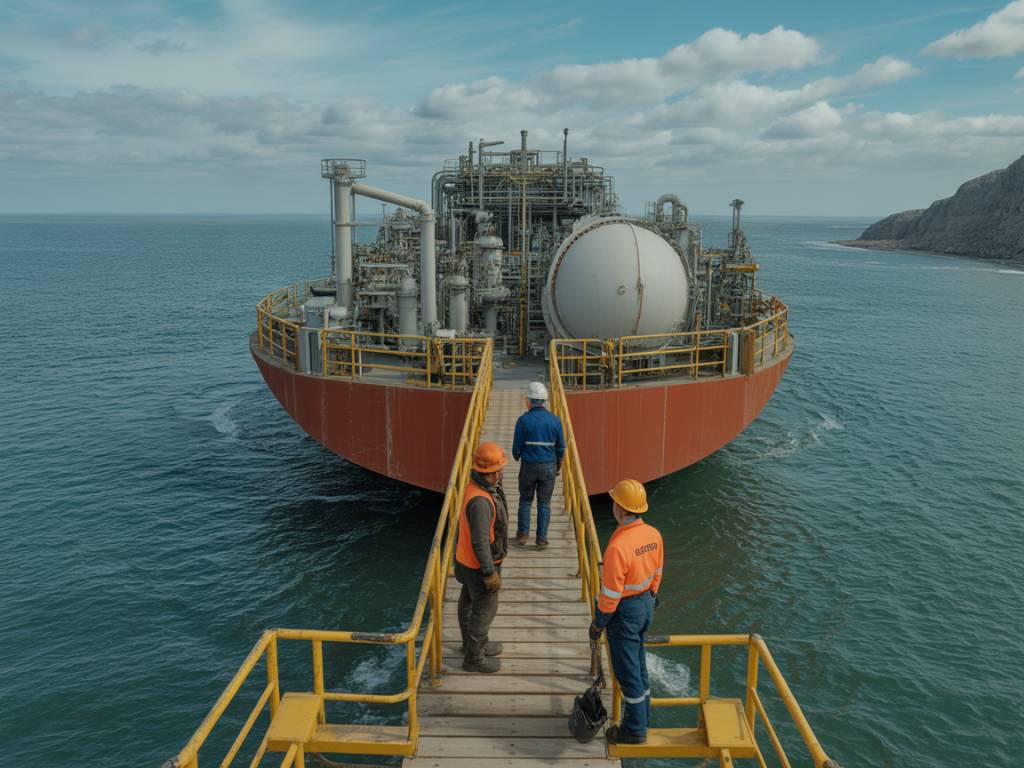
If you work in a high-risk industry, you already know the truth: one bad day can destroy years of good work.
But here’s the problem I see again and again when I train teams and managers: people treat safety like a checklist, not a culture.
They chase compliance, pass the audit, hang the certificate on the wall… and then go straight back to shortcuts on the shop floor, on the site, or in the vehicle.
What actually prevents incidents long term is not a thicker manual. It’s daily habits, clear standards, and leaders who act the same way in front of auditors as they do on a busy Friday at 4pm.
Let’s go through practical steps to build that kind of safety culture. Not theory. Things you can start implementing in the next 30 days.
Start with one brutal question: “Would I work this job myself?”
I always ask managers this during training. Picture the highest-risk task in your operation: confined space, working at height, heavy plant, live equipment, chemical handling.
Now strip away the job title and the salary. Just you and the task.
Ask yourself:
-
Would I personally do this job, with the current equipment, procedures and supervision?
-
Would I let my son or daughter do it?
If the honest answer is “no” or “only if they got lucky”, you don’t have a real safety culture yet. You have risk management on paper.
Your first step is simple: identify the top three tasks where your gut answer is “I’m not fully comfortable”. That’s where you focus your energy for the next quarter.
Make safety visible, measurable and boring (in a good way)
In sport, performance improves when you track the right numbers consistently. Same with safety. If your only metric is “number of accidents”, you’re already late.
You need leading indicators, not just lagging ones.
Here are basic, low-tech metrics that work in high-risk environments:
-
Number of near-miss reports per week (per team or department)
-
Percentage of planned safety observations completed (supervisors on the floor, not in the office)
-
Training completion vs. competency checks (not just e-learning done, but skills proven)
-
Time to close out safety actions (days between issue raised and action completed)
Pick 3–5 metrics. Put them on a simple board. Update weekly. Talk about them fast and clearly.
Example of a simple weekly board for a high-risk site:
-
Near misses reported: Target 10 / Actual 7
-
Supervisor safety walks: Target 12 / Actual 9
-
Corrective actions closed within 7 days: Target 90% / Actual 65%
-
Toolbox talks completed: Target 5 / Actual 5
That tells you a lot, fast. Under‑reporting? Leadership not visible? Actions dragging? You can adjust this week, not after the next accident.
Turn toolbox talks into training, not a box-tick
On too many sites, toolbox talks are like a bad warm-up: rushed, repeated, and nobody pays attention.
Reality check: if your toolbox talks are just someone reading off a sheet while everyone waits to get their name ticked, you’re training people to pretend safety matters.
Here’s a simple way to upgrade them in any high‑risk environment:
-
Keep it short: 8–12 minutes. After that, attention drops.
-
One topic at a time: e.g. “Lockout-tagout on the line”, “Spotters for reversing vehicles”, “Harness checks before climbing”.
-
Use a recent event: a near miss on your site, or a real incident from your sector. “Last Wednesday, we had… Here’s what actually happened.”
-
One clear behaviour change: end with a single, specific rule. For example:
-
“From today: any work at height above 2m = harness + anchor point double-checked by a second person.”
-
“From today: no energised work without written authorisation from [role].”
-
-
Test for understanding: 2–3 questions to the group. If they can’t answer, you explain again, shorter and clearer.
One of the strongest signals of culture? When your operators start bringing up last week’s toolbox talk themselves: “We said we’d always use a spotter here, remember?” That’s when you know it’s sticking.
Fix the “silent shortcut” problem
Every high‑risk workplace has two procedures:
-
The official one (in the manual).
-
The real one (what people actually do under pressure).
The gap between those two is where accidents live.
I once worked with a site where the official rule for isolating a conveyor involved six steps and a lockout system. The real practice at night shift? Hit the emergency stop, climb in, “just two minutes”. They’d done it that way for years without an injury. They thought that meant it was safe.
To close this gap, you need honesty, not blame.
Practical steps:
-
Run “reality walkthroughs”: once a week, a supervisor asks an operator, “Show me exactly how you do this.” No judgement, no lecture. Just watch.
-
Ask two questions:
-
“What do you do differently from the procedure?”
-
“Why?” (too slow, not practical, missing tools, pressure from production)
-
-
Log the differences and sort them:
-
Category A: the worker’s version is actually better → update the procedure.
-
Category B: the shortcut is risky but driven by real constraints → fix the constraints (tools, time, staffing).
-
Category C: the shortcut is dangerous and unjustifiable → stop it immediately, explain why, and coach hard.
-
This is like correcting lifting technique in the gym. If someone’s form is bad because the weight is too heavy, you don’t just shout “better technique!” You reduce the load, build capacity, then raise the standard.
Train like you mean it: from “attendance” to competence
Safety training often fails because it stops at “they turned up”. That’s like judging an athlete’s fitness because they attended training, not because they hit the times.
In high‑risk industries, you need a simple switch: from attendance-based to competency-based training.
That means you define, in advance, what “good” looks like for each critical skill, and you test it.
Example: working at height on scaffolding.
Instead of “did the course”, define competency like this:
-
Can fit and adjust a harness correctly within 90 seconds.
-
Can identify 5 key defects on a sample scaffold (built with deliberate faults).
-
Can explain, in their own words, the three non‑negotiables before climbing.
Now your training plan becomes:
-
Before work: theory + demo + practice, then a short practical test.
-
After 1 month: re-check on the job during real work (spot check by supervisor).
-
Every 12 months: refresh on real equipment, not just a PowerPoint.
Keep records, but keep them simple. Name, date, skill, result (pass / needs coaching). The point isn’t paperwork; it’s confidence that people can actually do the job safely.
Align incentives: stop rewarding unsafe speed
One of the biggest culture killers is when the fastest worker is also the one cutting the most corners… and gets praised for it.
People watch what you reward more than what’s written in the policy.
Ask yourself honestly:
-
Who gets the positive attention in your workplace?
-
Who gets the overtime, the bonuses, the “good job” comments?
If the answer is “the person who hits production targets no matter what”, don’t be surprised when shortcuts spread.
Practical adjustments:
-
Include safety metrics in performance reviews for supervisors and managers:
-
Near-miss reporting quality (not just numbers).
-
Completion of safety walks.
-
Response time to hazards.
-
-
Call out good safety decisions publicly:
-
“Team stopped the line for 10 minutes to fix a guarding issue. Lost a bit of output, avoided a serious risk. That’s the standard.”
-
-
Protect people who raise issues: if the guy who reported a problem ends up with worse shifts or less overtime, nobody else will speak up again.
The message must be crystal clear: hitting targets is good; hitting targets while ignoring safety is failure.
Make supervisors the “coaches” of safety
On a pitch, the head coach sets the strategy, but the assistant coaches are the ones who adjust technique, talk to players, and read the mood. In high‑risk industries, supervisors are those assistant coaches.
If they don’t buy in, your safety culture stalls. If they’re strong, everything moves faster.
Focus your efforts on supervisor behaviour:
-
Expect daily field presence: set a minimum time on the floor/field/site (for example, 60–90 minutes per shift dedicated to safety and operations, not admin).
-
Give them a simple checklist for safety walks:
-
At least 3 genuine conversations with operators.
-
At least 2 positive feedbacks for good practice.
-
At least 1 hazard or improvement opportunity logged.
-
-
Train them in how to correct behaviour without shutting people down:
-
Ask first: “Talk me through what you’re doing here.”
-
Explain the risk in concrete terms: “If this fails, your hand is here.”
-
Reset the standard: “From now on, the expectation is X, every time, even when it’s busy.”
-
Then measure their performance: not just on paperwork, but on what you see on the ground. If the site is messy, PPE is optional, and isolation locks are hanging unused, it’s not a “worker problem”. It’s a supervision problem.
Standardise the non‑negotiables
In training athletes, you can allow some individual style. But there are non‑negotiables: warm up, technique on heavy lifts, hydration, rest days.
In high‑risk work, you need the same: a small set of rules that are always enforced, no exceptions. Not 200 rules. Five to ten.
Examples of non‑negotiables, depending on your industry:
-
No work on live equipment without documented isolation and lockout.
-
No work at height without tested anchor points and inspected harness.
-
No entry into confined space without atmosphere testing, attendant, and permit.
-
No lifting of loads over people, ever.
-
No operating of plant without current authorisation and visual pre-use checks.
These must be:
-
Visible: posted clearly, reinforced in every induction.
-
Simple: everyone can repeat them in their own words.
-
Enforced: when someone breaks one, action is immediate. Coaching first, disciplinary if repeated or deliberate.
The power of non‑negotiables is not in the posters; it’s in what happens the first time they’re tested. If you bend them “just this once” to hit a deadline, you’ve just told everyone the real rule: safety is optional when it’s inconvenient.
Use incidents and near misses as live training material
In sport, every match is reviewed. Not to blame, but to learn: what went wrong, what went right, what changes next week.
In a strong safety culture, incidents and near misses get the same treatment.
Basic process that works across industries:
-
Within 24 hours: short factual summary to all relevant teams – what happened, immediate controls in place. No speculation, no blame.
-
Within 7 days: a structured review with the people involved and key stakeholders. Focus on:
-
What were we trying to achieve?
-
What actually happened (step by step)?
-
Where were the weak points in system, training, supervision, equipment?
-
-
One-page learning brief shared with all crews:
-
Short description.
-
Photo or simple sketch if useful.
-
3 key learnings.
-
1 or 2 rule or process changes.
-
Then you test if the learning sticks:
-
In toolbox talks, ask: “What did we change after the [X] incident?”
-
On site, observe: are people actually doing the new thing?
If not, you go back and coach again. Learning is a loop, not a memo.
Plan for fatigue and pressure, not just ideal days
Most accidents in high‑risk environments don’t happen on a calm Tuesday at 10am with full staffing and all equipment working perfectly.
They happen when:
-
Shifts run long.
-
Key people are off.
-
There’s pressure to hit a deadline or restart production.
If your safety systems only work on “good days”, they will fail when you need them most.
Move from fantasy planning to reality planning:
-
Identify your high‑pressure moments: end of shift, changeovers, breakdowns, big deliveries, bad weather.
-
Ask: “What shortcuts do people usually take then?” You already know them. Write them down.
-
Design countermeasures:
-
Extra supervision or “floater” roles at known pressure points.
-
Clear rule: no starting a new high‑risk job in the last X minutes of a shift.
-
Simple decision tree for breakdowns: when to stop, who to call, what is never allowed.
-
In other words, you train for game conditions, not just warm‑ups.
Set a 90‑day plan and treat safety like performance training
Culture change feels huge. The way around that is to think like a coach: pick a few key priorities, work them hard for a fixed period, then reassess.
Example of a 90‑day safety culture plan for a high‑risk site:
-
Month 1: Visibility and reality check
-
Introduce weekly safety board with 3–5 metrics.
-
Run “reality walkthroughs” on the top 3 highest‑risk tasks.
-
Upgrade toolbox talks to the “one topic, one behaviour” format.
-
-
Month 2: Supervisor focus
-
Set minimum daily safety walk time for supervisors.
-
Train supervisors on coaching conversations, not just enforcement.
-
Define and communicate 5–10 non‑negotiable safety rules.
-
-
Month 3: Lock in learning
-
Standardise incident/near‑miss learning briefs.
-
Convert one critical activity from “training attended” to “competence proven”.
-
Adjust incentives and recognition to include safety behaviours.
-
At the end of 90 days, review like you would after a training block:
-
What improved, measurably?
-
Where are you still weak?
-
What becomes “normal” now, and what needs a new push?
Safety culture is not a project with an end date. It’s like physical conditioning: once you stop working on it, you start losing it. The good news is that small, consistent, practical changes add up fast, especially in high‑risk environments where the gap between “almost” and “accident” is very small.
The goal is simple: build a workplace where, on the worst day, under the most pressure, the safe way is still the normal way. That’s when you know your culture is doing its real job: preventing incidents, not just reporting them.